Author Experiences

Work shaped around the author, book, and opportunity.

Author experiences are shared only with approval. Each one reflects work completed through Genuine Book Pathways Team by the strategist or specialist best suited to that author’s needs.

Featured authors

Author stories, shared with permission.

The public site shows an author only with their approval, and only the details they have approved.

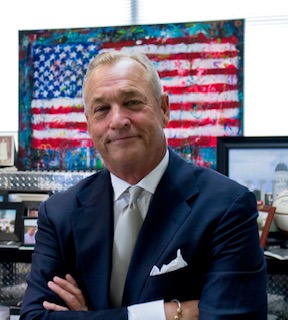
Robert L. Griggs, founder of Trinity Products and author of Foundational Leadership
Featured with permission
Featured Author

Robert L. Griggs

Founder of Trinity Products

Author of Foundational Leadership: Growth Doesn’t Start at the Top

Robert L. Griggs is the founder of Trinity Products and the author of Foundational Leadership: Growth Doesn’t Start at the Top, a nonfiction leadership book built around transparency, employee ownership, continuous improvement, and respect for the people closest to the work.

Genuine Book Pathways Team supported the public positioning of Robert’s leadership story, author-platform development, media outreach, and the development of clear materials to introduce the book to professional readers, industry audiences, and entrepreneurship communities.

The work centered on presenting Robert’s experience as a business founder and leadership voice in a way that was useful to readers looking for practical ideas about trust, workplace culture, employee ownership, continuous improvement, and long-term leadership.

“Linda is one of the most professional and inspiring people I’ve met in a really long time. Working with her gave me a wonderful and enjoyable opportunity to relive part of my journey.”

Robert L. GriggsFounder of Trinity Products
Author of Foundational Leadership: Growth Doesn’t Start at the Top

Featured with permission.

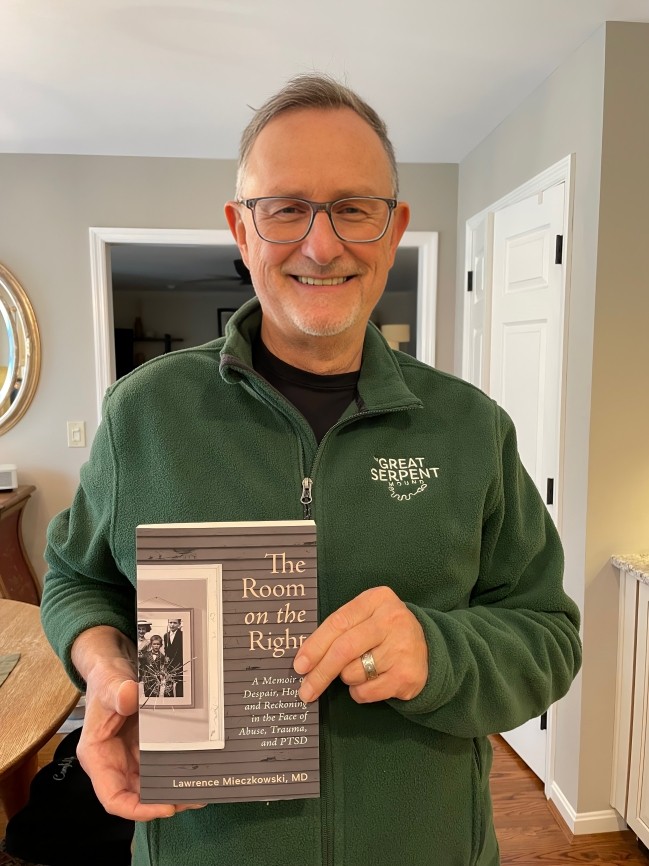
Dr. Lawrence “Mitch” Mieczkowski holding his memoir The Room on the Right
Featured with permission
Featured Author

Dr. Lawrence “Mitch” Mieczkowski, MD

Physician, speaker, mental-health advocate, and author

Author of The Room on the Right: A Memoir of Despair, Hope, and Reckoning in the Face of Abuse, Trauma, and PTSD

Dr. Lawrence “Mitch” Mieczkowski is an award-winning physician, speaker, mental-health advocate, and author whose memoir, The Room on the Right, explores childhood trauma, complex PTSD, psychotherapy, family silence, and the possibility of recovery later in life.

Mitch worked with Genuine Book Pathways Team on a focused series of author-platform, writing, and visibility decisions. The work was personal to the author’s voice, practical to the immediate opportunities in front of him, and grounded in the principle that a serious memoir should never be marketed as a generic product.

Featured with permission.

Read the full work description

The starting point

Mitch had a meaningful body of work already in motion:

  • A published memoir with a clear mission for survivors, families, clinicians, and readers trying to understand trauma from the inside.
  • An active speaking role through NAMI, including presentations for students, first responders, and community audiences.
  • A developing short documentary project, later titled What Remains Unbroken.
  • Strong reader interest and active book-promotion efforts across Amazon, Goodreads, Facebook, LinkedIn, TikTok, and his author website.
  • Personal essays in development, including a Rust Belt homecoming essay about returning to Steubenville, Ohio.

The challenge was not a lack of material or credibility. Mitch needed a clear way to decide what deserved attention first, how the individual pieces of his platform could reinforce one another, and how to maintain the integrity of work rooted in lived experience.

Author platform and website guidance

The work included a review of Mitch’s author website and the journey a reader took after arriving there, particularly readers coming from Facebook and social-media activity. Guidance focused on practical, author-controlled improvements:

  • Clarifying the home page’s emotional entry point.
  • Encouraging clear next steps for a visitor, including a visible book link, Author-page path, and call to action.
  • Reviewing the relationship between his home page, Author page, book links, trailers, reviews, and reader journey.
  • Helping interpret website analytics without overreacting to a short-term anomaly.
  • Identifying the difference between a traffic issue and an engagement or conversion-path issue.
  • Encouraging a measured response to temporary analytics irregularities, including checking that pages and links worked before spending money on a site redesign.

The aim was not to replace Mitch’s voice or take control of his website. It was to help his existing readers find a clearer path from interest to action.

Book-promotion strategy

Mitch was already actively promoting The Room on the Right. The work centered on helping him use that energy strategically rather than adding noise. Areas of guidance included:

  • Reviewing Amazon, Audible, paperback, Kindle, and Goodreads movement in context.
  • Discussing how to interpret ranking changes without treating every daily fluctuation as a verdict on the book.
  • Supporting Goodreads and Listopia visibility efforts.
  • Helping him recognize and avoid unsolicited, pay-to-play, or suspicious book-marketing pitches.
  • Discussing how to use reader-facing posts, reviews, visibility moments, and limited-time promotions in ways that felt authentic to his audience.
  • Encouraging simple before-and-after tracking around price promotions, including format rankings, reviews, and visible traffic data.

The emphasis remained on thoughtful reader connection, not inflated promises or artificial momentum.

Personal-essay positioning and submission strategy

Mitch developed a personal essay about returning to Steubenville, Ohio, the steel town where he grew up. The essay brought together industrial decline, family history, trauma, memory, labor, medicine, and the landscape of a neighborhood that had nearly disappeared. The work included:

  • Reading and responding to successive versions of the essay.
  • Identifying its strongest emotional and regional images, including the steel mills and the connection between industrial labor and the physical burdens Mitch later saw in his patients.
  • Helping distinguish the essay from a more familiar trauma or PTSD submission.
  • Reframing it as a Rust Belt homecoming and a physician’s reckoning with the town that formed him.
  • Reviewing titles and supporting the final direction of the piece.
  • Developing a submission strategy for national, regional, and literary outlets.
  • Drafting and refining a pitch approach that led with place, steel, working-class memory, and return rather than presenting the piece solely as a mental-health essay.
  • Helping Mitch respond constructively to editor feedback and keep the essay moving.
  • Discussing publication sequencing, simultaneous-submission considerations, and the importance of maintaining a clear record of where the piece had been sent.

The goal was to help the essay reach editors through the door it was best built to enter.

Documentary and screenplay feedback

Mitch was also developing a short documentary based on his memoir, eventually titled What Remains Unbroken. The work included:

  • Reviewing early and revised narrative materials for the documentary.
  • Supporting the shift away from a purely chronological retelling of traumatic events and toward a more intimate, conversational story of survival, recovery, and meaning.
  • Helping identify the emotional spine of the film.
  • Giving feedback on themes, structure, title direction, specific memories, factual continuity, and the balance between personal history and broader context.
  • Supporting the idea of filming in Mitch’s home to create a more personal, grounded setting.
  • Reviewing an interview-driven screenplay and helping distinguish between a useful creative guide for a director and a rigid script that might limit the natural life of an interview.
  • Encouraging language that would sound like Mitch speaking honestly on camera rather than reading polished prose aloud.

The central aim was to help preserve the humanity of Mitch’s story while giving a filmmaker a clear sense of what the project was truly about.

New-project development

Mitch also shared the opening chapters of a developing medical thriller. The early feedback focused on first-reader response rather than premature editing:

  • Recognizing Mitch’s natural authority in medical settings and diagnostic scenes.
  • Encouraging him to continue drafting while the story’s momentum, central conflict, and character relationships were alive.
  • Discussing a sensible long-term path: finish the manuscript, revise it thoroughly, create a synopsis and query materials, then approach agents who genuinely represent medical thrillers or commercial suspense.

Approach

This was not a one-size-fits-all campaign. The work adapted to the real projects Mitch was carrying at the time: his memoir, his NAMI presentations, his author website, the Steubenville essay, the documentary, and a new novel. The approach prioritized:

  • Protecting the author’s voice.
  • Giving direct, honest feedback without flattening personal material.
  • Identifying the strongest available angle for each project.
  • Distinguishing useful opportunities from distractions.
  • Helping the author make decisions in sequence rather than trying to pursue every possibility at once.
  • Keeping the focus on readers, editors, viewers, and communities most likely to understand and value the work.
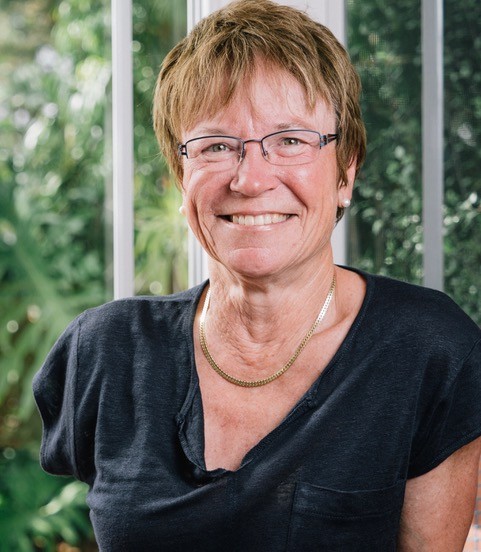
Portrait of Linda K. Olson, author of Gone
Featured with private approval
Featured Author

Linda K. Olson

Author, speaker, and advocate

Author of Gone and the “Get Out and Go” message

Linda’s work with Genuine Book Pathways Team was built around a close, collaborative relationship. The process combined book-marketing strategy, editorial guidance, campaign organization, content development, and ongoing communication.

The work was shaped around Linda’s individual voice and goals. Rather than applying a generic promotional formula, the strategy connected her memoir, medical career, disability experience, family life, advocacy, speaking work, and “Get Out and Go” message within one clear and sustainable author platform.

Linda remained closely involved throughout the process. She reviewed personal stories, photographs, messaging, and public-facing content before publication, ensuring that the campaign represented her experiences accurately and respectfully.

Featured with private approval.

Read the full work description

Where the work began

Genuine Book Pathways Team supported Linda K. Olson in developing a focused, long-term platform for Gone and the broader body of work surrounding her “Get Out and Go” message. The engagement began with a review of Linda’s existing author foundation, published memoir, professional background, audiences, public message, and opportunities for continued visibility. Because Gone was already professionally published, the strategy concentrated on expanding awareness and strengthening the connection between the book and the communities it was written to serve.

What the work included

  • Campaign strategy and audience identification
  • Message development
  • Social-media planning and management, and caption writing
  • Long-form story development and editorial support
  • Professional and institutional outreach planning
  • Speaking-opportunity development

Social-media content

Content was developed for Facebook, Instagram, and LinkedIn. Each platform received content shaped for its audience while maintaining Linda’s voice. The strategy used Linda’s photographs, memories, professional experience, family stories, travel experiences, and outdoor adventures to help readers understand the larger meaning behind Gone and “Get Out and Go.”

Longer written projects

The engagement also included the development and refinement of longer written projects, including 768 Stairs, the Get Out and Go blog, and stories such as Linda’s return to wilderness camping at Yellowstone. Editorial support focused on structure, clarity, grammar, pacing, and emotional continuity without replacing Linda’s natural language or making her stories sound overly polished.

Speaking and professional outreach

Genuine Book Pathways Team supported the preparation and submission of Linda’s session proposal, “Get Out and Go to Work: Building a Career and Having a Family After Limb Loss,” for the Amputee Coalition National Conference 2027. The work included:

  • Reviewing submission requirements
  • Refining the title and presentation concept
  • Editing the session pitch and summary
  • Preparing presenter material and coordinating co-presenter information
  • Checking the final application before submission

Scope

Throughout the engagement, the focus remained on clear strategy, thoughtful visibility, and respectful representation. No specific sales, rankings, media placements, speaking engagements, or other outcomes were promised. The goal was to build a stronger and more organized path for Linda’s book, experience, and ongoing message to reach relevant readers and professional communities.

References are shared with permission. Authors who agree to be listed as direct references have voluntarily chosen to make their approved contact information available to serious prospective clients. Please contact them respectfully and only in connection with Genuine Book Pathways Team services.
Anonymous Experience

Business & Leadership Author

Published nonfiction title

Use an approved, non-identifying summary of actual positioning, platform, launch, or visibility work.

“[Approved anonymous testimonial.]”
Anonymous Experience

Memoir & Transformation Author

Published nonfiction title

Use an approved description that protects the author’s identity while explaining the value of the work.

“[Approved anonymous testimonial.]”

Our reference policy

Permission first. Accuracy always.

We protect the authors we work with, and we protect the people who read about them.

Approval first

Nothing is published without it

Author names, books, testimonials, images, links, and details appear only with the author’s approval.

Direct references

Available where authors agree

Where an author has agreed to be a direct reference, a “Contact directly” button appears on their profile. Personal contact details are never published as text on this site.

Accuracy

Reflecting real work

Each author experience reflects work completed through Genuine Book Pathways Team by the strategist or specialist best suited to that author’s needs. Results vary.

Next step

Your book could be the next author story.

Share your book, publishing stage, and goals. We will review the opportunity and recommend the most relevant next step.